Visit to Vindolanda – June 2026
This year’s society trip was to Vindolanda and its associated Roman Army Museum. After a trouble-free journey members and friends first disembarked at the Roman Army museum which is situated close to the Magna archaeological site. The museum has an interesting collection of Roman army artifacts, many uncovered local in recent excavations. Troops based in the vicinity of Hadrian’s walls were auxiliary troops in the roman army, recruited from other areas of the empire. British troops also served in the Roman army but outside of ‘Britannia.’ The museum also has some interesting audio-visual displays including an interactive classroom, complete with a Greek slave ‘teacher’ who will give you an introduction to basic Latin and roman numerals. Outside of the building, a short walk brings you to the current archaeological ‘dig’ on the Magna fort site.
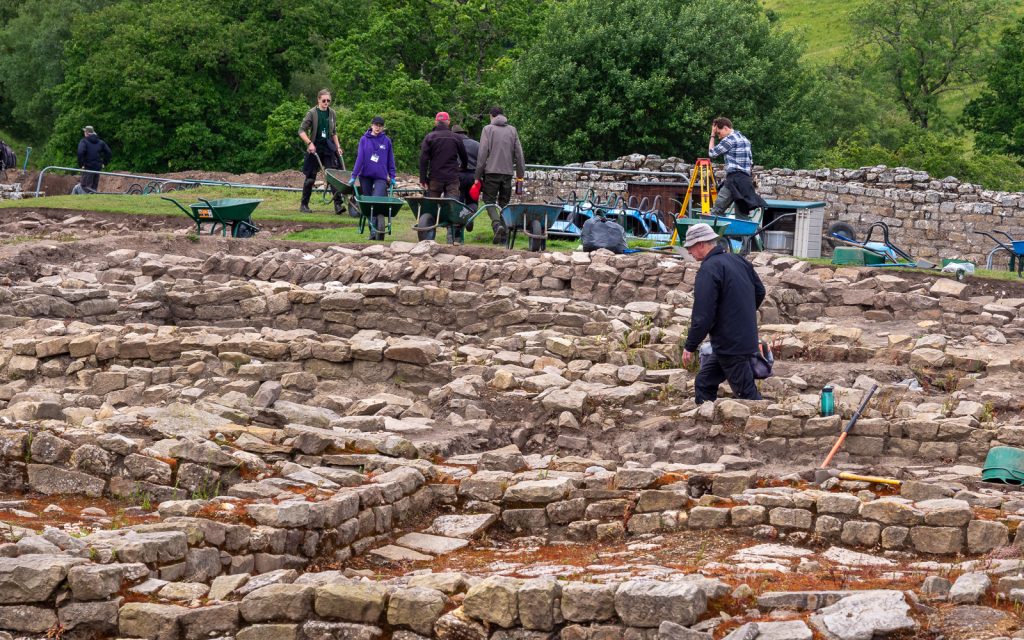
After lunch, the coach departed for Vindolanda, a short journey across seven miles of countryside. This fort site has a long history of occupation which predates the construction of the nearby Hadrian’s wall fortifications. The fort itself was rebuilt over nine times, mainly in wood and turf, before finally being rebuilt in stone. Much of the site today reflects the remains of the later stone-built period fort when it was occupied by an elite force of auxiliary heavy calvary. Following the withdrawal of Roman occupation, the fort site continued to be used for shelter and protection during the tumultuous period known as the Dark ages. Indeed, the museum has an interesting collection of early Anglo-Saxon Christian artifacts excavated on the fort site.
The unique geological conditions under the fort have however helped preserve many unique artifacts from the roman occupation period. The museum boasts an impressive leather shoe collection. Perhaps more poignantly, the skull of a decapitated young man was recovered from the depths of a ditch. DNA analysis, indicated that this individual had mixed Roman/British origins, what story underpins his brutal demise?
Underneath one of the barrack room floors, the skeleton of a young child was found, the limbs having apparently been bound with ropes prior to interment beneath the floor. Burial’s however within forts and towns was prohibited, indicating that this child had possibly been murdered.
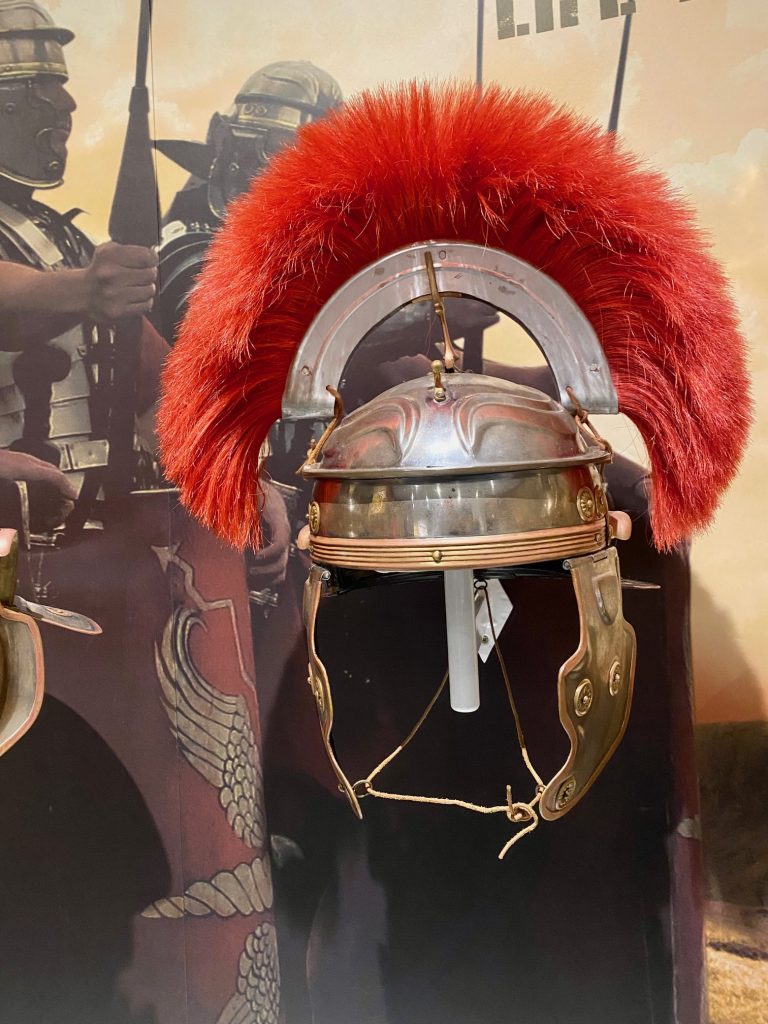
Many of the museum artifacts are beautifully displayed and throw a fascinating light onto the personal lives of the troops and their families who occupied the fort. The greatest treasure on display, are the recovered tablets, thin strips of wood with delicate inscribed lettering which discuss the minutiae of life within the northern frontier zone. The most touching of these tablets are the birthday invites from one senior roman commanders’ wife to another at a nearby fort.
Many thanks. To Peter Scott and Kathryn McLachlan for sorting finance and event communication and coordination. Special thanks to Jill Wharton for organising the visit.